
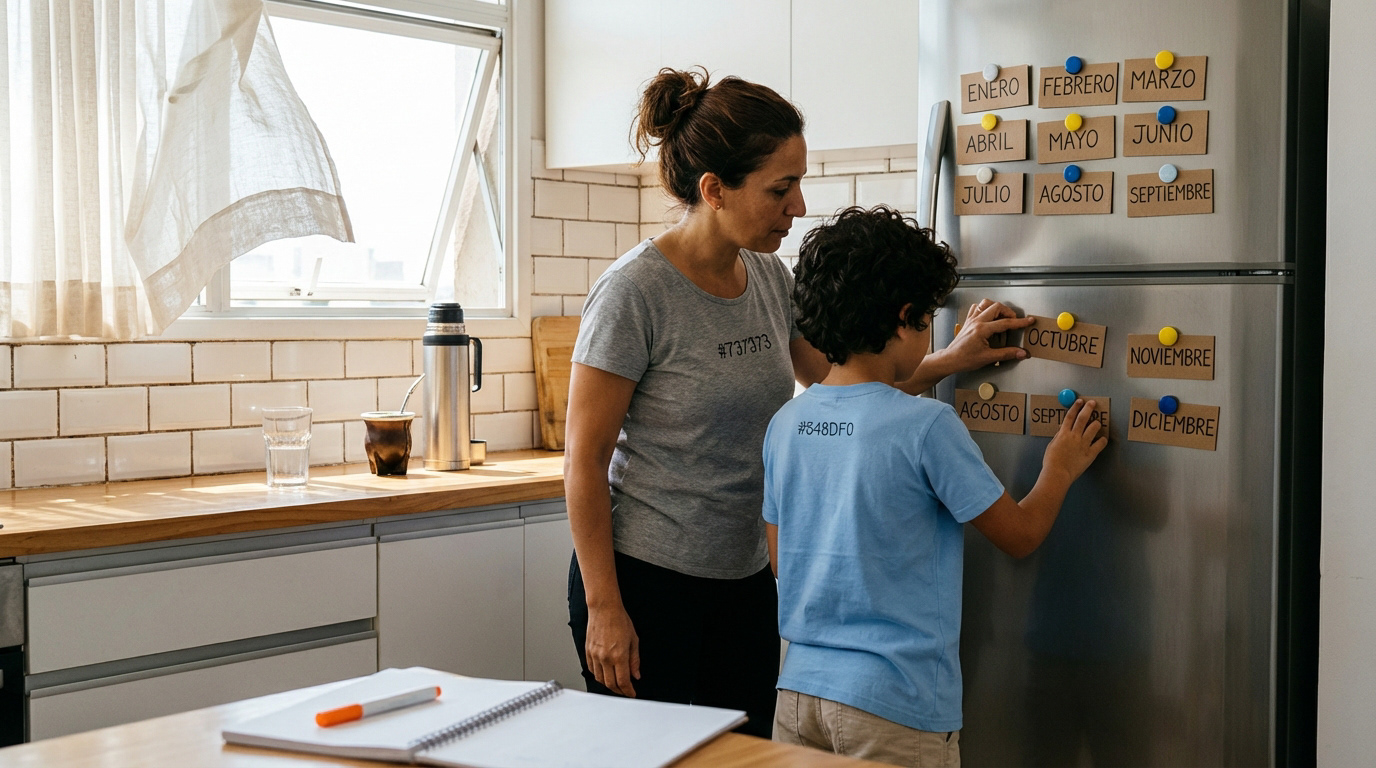
Escena hiperrealista de estudio en casa: dos estudiantes latinos revisan un calendario y un cuaderno de práctica para aprender meses en inglés, con laptop y luz natural, composición minimalista sin texto legible.
Más vocabulario en redes
Si quieres ampliar tu vocabulario además de meses en inglés, en YouTube y TikTok practicamos más palabras y uso real: animales, objetos, comidas, slangs, frases cotidianas, historias y chistes. Verás el vocabulario en contexto, con pronunciación clara y ejemplos cortos para repetir. Sigue nuestras cuentas para practicar a diario y avanzar más rápido con material para aprender inglés y english vocabulary, y luego refuerza en tu workbook con escritura y gramática.
Videos para aprender inglés
Meses en inglés: January
January = enero. Úsalo para hablar del primer mes del año, inicio de clases, planes nuevos y fechas importantes.
Mujer: What month is it?
Hombre: It’s January.
Mujer: Perfect. My English class starts in January.
Mujer: ¿Qué mes es?
Hombre: Es enero.
Mujer: Perfecto. Mi clase de inglés empieza en enero.
Practice with AI (English) + link: Ask the AI: “Quiz me on the months in English. Start with January and correct my spelling and pronunciation.” https://chatgpt.com/g/g-33sGXVQuD-aprende-ingles-con-gpt
Meses en inglés: February
February = febrero. Úsalo para hablar de planes cortos, vacaciones, o fechas como San Valentín, sin complicarte.
Hombre: Is your appointment in February?
Mujer: Yes, it’s in February.
Hombre: Great. See you in February.
Hombre: ¿Tu cita es en febrero?
Mujer: Sí, es en febrero.
Hombre: Perfecto. Nos vemos en febrero.
Prompt para copiar: “Ask me 5 questions using February, then make me answer in full sentences.”
Meses en inglés: March
March = marzo. Úsalo para hablar de tu cumpleaños, clima, o el mes en que empiezas algo nuevo.
Mujer: When is your birthday?
Hombre: It’s in March.
Mujer: Nice! March is a great month.
Mujer: ¿Cuándo es tu cumpleaños?
Hombre: Es en marzo.
Mujer: Qué bien. Marzo es un gran mes.
Prompt para copiar: “Have a short conversation with me about birthdays using March. Correct me gently.”
Meses en inglés: April
April = abril. Úsalo para decir cuándo viajas, cuándo pagas algo, o cuándo empieza una actividad.
Hombre: Are we traveling in April?
Mujer: Yes, we’re traveling in April.
Hombre: Great, April works for me.
Hombre: ¿Viajamos en abril?
Mujer: Sí, viajamos en abril.
Hombre: Perfecto, abril me sirve.
Prompt: “Plan a simple trip with me. Ask me questions using April and help me answer.”
Meses en inglés: May
May = mayo. Úsalo para hablar de fechas de trabajo o escuela, eventos, o planes para el fin de semana.
Mujer: When is the meeting?
Hombre: It’s in May.
Mujer: Okay, the meeting is in May.
Mujer: ¿Cuándo es la reunión?
Hombre: Es en mayo.
Mujer: Está bien, la reunión es en mayo.
Prompt: “Give me 6 short work questions using May. I’ll answer and you correct my grammar.”
Meses en inglés: June
June = junio. Úsalo para hablar de mitad de año, vacaciones, calor, y planes familiares.
Hombre: Is summer in June?
Mujer: Yes, summer starts in June.
Hombre: I love June.
Hombre: ¿El verano es en junio?
Mujer: Sí, el verano empieza en junio.
Hombre: Me encanta junio.
Prompt: “Talk with me about seasons and months. Use June and keep it beginner-friendly.”
Meses en inglés: July
July = julio. Úsalo para hablar de vacaciones, fiestas, o cuándo descansas del trabajo/escuela.
Mujer: Do you have vacation in July?
Hombre: Yes, I have vacation in July.
Mujer: Great! Enjoy July.
Mujer: ¿Tienes vacaciones en julio?
Hombre: Sí, tengo vacaciones en julio.
Mujer: Perfecto. Disfruta julio.
Prompt: “Role-play vacation planning. Ask me questions using July and help me answer with simple sentences.”
Meses en inglés: August
August = agosto. Úsalo para decir cuándo regresas a clases, terminas un curso, o haces un plan de fin de verano.
Hombre: When does the course end?
Mujer: It ends in August.
Hombre: Okay, it ends in August.
Hombre: ¿Cuándo termina el curso?
Mujer: Termina en agosto.
Hombre: Está bien, termina en agosto.
Prompt: “Ask me questions about schedules using August. Use short sentences so I can write them.”
Meses en inglés: September
September = septiembre. Úsalo para hablar de regreso a clases, nuevas rutinas y objetivos del año.
Mujer: School starts in September, right?
Hombre: Yes, school starts in September.
Mujer: September is busy.
Mujer: La escuela empieza en septiembre, ¿verdad?
Hombre: Sí, la escuela empieza en septiembre.
Mujer: Septiembre es ocupado.
Prompt: “Ask me 5 questions and make me answer confidently.”
Meses en inglés: October
October = octubre. Úsalo para hablar del otoño (en muchos países), eventos, y planes para el final del año.
Hombre: Is the event in October?
Mujer: Yes, it’s in October.
Hombre: Perfect, October is fine.
Hombre: ¿El evento es en octubre?
Mujer: Sí, es en octubre.
Hombre: Perfecto, octubre está bien.
Prompt: “Pretend you are my friend. Ask me about events using October and correct my answers.”
Meses en inglés: November
November = noviembre. Úsalo para hablar de fin de año, planes familiares, o fechas de entrega en el trabajo.
Mujer: When is the deadline?
Hombre: The deadline is in November.
Mujer: Okay, in November.
Mujer: ¿Cuándo es la fecha límite?
Hombre: La fecha límite es en noviembre.
Mujer: Está bien, en noviembre.
Prompt: “Give me 8 short sentences with November. I’ll repeat them and you correct my pronunciation.”
Meses en inglés: December
December = diciembre. Úsalo para hablar de fiestas, vacaciones, fin de año y planes para el próximo año.
Hombre: Do you travel in December?
Mujer: Yes, I travel in December.
Hombre: December is my favorite month.
Hombre: ¿Viajas en diciembre?
Mujer: Sí, viajo en diciembre.
Hombre: Diciembre es mi mes favorito.
Prompt: “Have a simple conversation with me about December plans. Keep it beginner and correct my mistakes.”
Workbook recomendado: Inglés Básico 1
Si estás empezando, este es el tipo de material para aprender que más te rinde: un workbook claro, práctico y directo para escribir y fijar lo básico sin perderte. Con Inglés Básico 1: Fundamentos practicas vocabulario esencial como meses en inglés, estructura de frases y gramática simple con ejercicios que puedes repetir hasta que te salga natural. Ideal si buscas libros para aprender inglés leyendo pdf y quieres avanzar con orden.
Para mejorar el inglés hablado, combínalo con práctica guiada con inteligencia artificial. Copia y pega prompts como estos (en inglés):
“Ask me questions using the months in English. I will answer with short sentences.”
“Correct my spelling and pronunciation of the months. Make me repeat them in random order.”
“Create a simple dialogue about planning a trip using January to December. Keep it beginner.”
Este combo (workbook + práctica oral con IA) te ayuda a recordar más rápido, escribir mejor y hablar con más seguridad.
Números ordinales en inglés
Habilidad: usar numeros ordinales en inglés (1st–30th). Situación: filas, fechas, asientos y turnos. Beneficio: hablas con más claridad y entiendes instrucciones de orden.
Skill: use English ordinal numbers (1st–30th). Situation: lines, dates, seats, and turns. Benefit: you speak clearly and understand ordering instructions faster.
Artículos definidos en inglés
Habilidad: usar 'the' para hablar de algo específico. Situación real: pedir, señalar y confirmar objetos concretos en cafetería, tienda o clase. Beneficio: reduces errores básicos y suenas más natural.
Skill: use 'the' to talk about something specific. Real situation: ordering, pointing, and confirming specific items in a cafe, shop, or class. Benefit: fewer basic mistakes and more natural English.
Colores en inglés
Habilidad: decir colores en inglés. Situación: compras y objetos cotidianos. Beneficio: respondes rápido y escribes frases correctas.
Skill: say colors in English. Situation: shopping and everyday objects. Benefit: answer fast and write correct short sentences.
Artículos indefinidos en inglés
Habilidad: usar a/an. Situación real: pedir o describir cosas en una conversación. Beneficio: sonar natural y evitar errores básicos.
Skill: use a/an. Real situation: ordering or describing things in a conversation. Benefit: sound natural and avoid basic mistakes.
Verbo ser y estar en inglés
Habilidad: usar “to be” y elegir ser/estar | Situación real: presentarte y decir dónde estás | Beneficio: hablar claro sin dudar
Skill: use “to be” and map it to ser/estar | Real-life situation: introduce yourself and say where you are | Benefit: speak clearly with fewer mistakes
Días de la semana en inglés
Habilidad: decir y escribir los días de la semana en inglés. Situación real: planificar clases, turnos y citas. Beneficio: menos errores y más confianza al hablar.
Skill: say and write the days of the week. Real-life situation: planning classes, shifts, and appointments. Benefit: fewer mistakes and more confidence when speaking.
Fechas en inglés
Habilidad: preguntar y decir fechas en inglés. Situación real: reservar una cita o comprar un boleto. Beneficio: evitar confusiones y responder rápido.
Skill: ask for and say dates. Real situation: booking an appointment or buying a ticket. Benefit: avoid confusion and answer faster.
Pronombres personales en inglés
Usar pronombres personales para hablar de ti y de otras personas en una conversación diaria; escribir frases correctas; ganar fluidez con práctica guiada.
Use personal pronouns to talk about yourself and others in daily conversations; write correct sentences; build fluency with guided practice.
Saludos en inglés
Habilidad: saludos en inglés | Situación: conocer a alguien y empezar conversación | Beneficio: escribir y responder con seguridad
Skill: greetings in English | Situation: meeting someone and starting a conversation | Benefit: write and reply with confidence
Presentarte en inglés
Habilidad: presentarte en inglés. Situación: conocer a alguien en clase o trabajo. Beneficio: hablar con más seguridad en tus primeras conversaciones.
Skill: introducing yourself in English. Situation: meeting someone at school or work. Benefit: speak with more confidence in your first conversations.