Más vocabulario en redes
En nuestras cuentas de YouTube y TikTok enseñamos más frases útiles con el verbo to be, además de vocabulario sobre emociones, ocupaciones, lugares, rutinas e historias cortas. Síguenos para aprender inglés desde la base.
Videos para aprender inglés

Aprende el verbo to be en inglés desde cero: ser, estar y más
El verbo to be en inglés es una de las bases de todo el idioma. Su significado abarca tanto el verbo “ser” como “estar” en español, y se usa para describir personas, lugares, estados, profesiones, emociones, precios, clima y más. Aprenderlo bien desde el principio te permite formar frases completas, naturales y claras desde tu primer día.
En esta lección verás cómo usar to be en contextos reales: presentarte, decir tu edad, hablar del clima o describir cómo te sientes. Cada diálogo está diseñado para principiantes, con frases cortas, útiles y situaciones comunes. Así mejoras tu comprensión y tu expresión al mismo tiempo.
Gramática clave
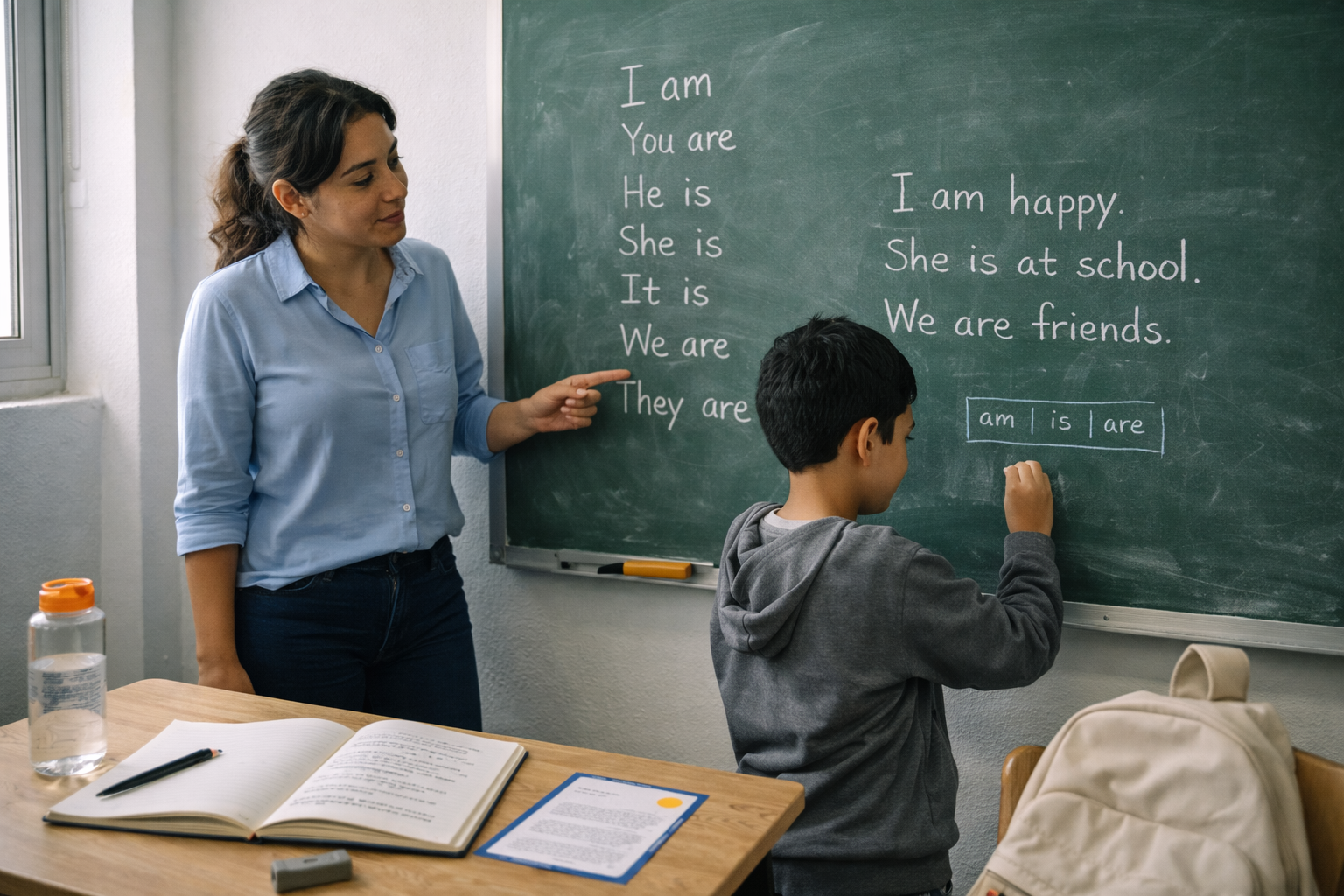
El verbo to be tiene tres formas en presente:
am (con “I”) → I am happy.
is (con “he”, “she”, “it”) → She is tall.
are (con “you”, “we”, “they”) → They are at school.
También se usa para hacer preguntas y respuestas cortas:
Are you tired? – Yes, I am.
Is he your friend? – No, he isn’t.
El verbo to be también aparece en estructuras importantes como:
Presente continuo: I’m studying.
Localización: She is at home.
Emociones: We are happy.
Precio: It is ten dollars.
Expresiones de tiempo: It’s Monday.
Clima: It is hot.
Dominar estas formas te permite avanzar rápido y comunicarte con seguridad.
¿Cómo avanzar más?
Nuestro libro para principiantes incluye ejercicios guiados sobre to be, con prácticas de escritura, comprensión auditiva y frases para usar en tu día a día. Aprenderás con claridad, ejemplos reales y correcciones paso a paso.
No esperes más. Aprende a usar el verbo más importante del inglés y empieza a construir frases completas hoy.
Practica con la IA estas frases
Name and Nationality
A: Hi, I’m Carlos. What’s your name?
B: I’m Laura. Nice to meet you.
A: Nice to meet you too. Are you from Spain?
B: No, I’m from Mexico.
A: Hi, I’m Carlos. What’s your name?
B: I’m Laura. Nice to meet you.
A: Nice to meet you too. Are you from Spain?
B: No, I’m from Mexico.
Job / Profession
A: What’s your job?
B: I’m a teacher. And you?
A: I’m a student.
A: What’s your job?
B: I’m a teacher. And you?
A: I’m a student.
Age
A: How old are you?
B: I’m twenty years old. How old are you?
A: I’m eighteen.
A: How old are you?
B: I’m twenty years old. How old are you?
A: I’m eighteen.
Personality
A: Is your brother shy?
B: No, he isn’t. He is very friendly.
A: Are you friendly too?
B: Yes, I am, but I’m a little quiet.
A: Is your brother shy?
B: No, he isn’t. He is very friendly.
A: Are you friendly too?
B: Yes, I am, but I’m a little quiet.
Physical Description
A: Is your sister tall?
B: Yes, she is tall and very athletic.
A: Are your parents tall too?
B: No, they are short.
A: Is your sister tall?
B: Yes, she is tall and very athletic.
A: Are your parents tall too?
B: No, they are short.
Time and Day
A: What day is it today?
B: It’s Monday.
A: What time is it?
B: It is three o’clock.
A: What day is it today?
B: It’s Monday.
A: What time is it?
B: It is three o’clock.
Location
A: Where are you now?
B: I’m at home.
A: Is your mother at home too?
B: No, she is at work.
A: Where are you now?
B: I’m at home.
A: Is your mother at home too?
B: No, she is at work.
Feelings / Emotions
A: How are you today?
B: I’m very tired, but I’m happy.
A: Why are you tired?
B: I’m tired because I’m busy at work.
A: How are you today?
B: I’m very tired, but I’m happy.
A: Why are you tired?
B: I’m tired because I’m busy at work.
Temporary Situations
A: Are you busy right now?
B: Yes, I’m busy. I’m in a meeting.
A: Okay, you are busy now.
B: Yes, but I’m free later.
A: Are you busy right now?
B: Yes, I’m busy. I’m in a meeting.
A: Okay, you are busy now.
B: Yes, but I’m free later.
Weather
A: How is the weather today?
B: It is very hot today.
A: Is it hot in your city too?
B: No, it is cold here.
A: How is the weather today?
B: It is very hot today.
A: Is it hot in your city too?
B: No, it is cold here.
Objects and Place
A: Where is my phone?
B: It is on the table.
A: And where are my keys?
B: They are in your bag.
A: Where is my phone?
B: It is on the table.
A: And where are my keys?
B: They are in your bag.
Health / Condition
A: How is your sister?
B: She is sick today.
A: Is she at the hospital?
B: No, she is at home in bed.
A: How is your sister?
B: She is sick today.
A: Is she at the hospital?
B: No, she is at home in bed.
Present Continuous
A: What are you doing now?
B: I’m studying English.
A: Is your brother studying too?
B: No, he is watching TV.
A: What are you doing now?
B: I’m studying English.
A: Is your brother studying too?
B: No, he is watching TV.
There is / There are
A: Is there a bathroom here?
B: Yes, there is a bathroom.
A: Are there any chairs in the room?
B: Yes, there are four chairs.
A: Is there a bathroom here?
B: Yes, there is a bathroom.
A: Are there any chairs in the room?
B: Yes, there are four chairs.
Price / Cost
A: How much is this book?
B: It is ten dollars.
A: And how much are these pens?
B: They are two dollars.
A: How much is this book?
B: It is ten dollars.
A: And how much are these pens?
B: They are two dollars.
Marital Status
A: Are you married?
B: No, I’m single.
A: Is your sister married?
B: Yes, she is married.
A: Are you married?
B: No, I’m single.
A: Is your sister married?
B: Yes, she is married.
Skills: Good at / Bad at
A: Are you good at math?
B: Yes, I’m good at math, but I’m bad at history.
A: I’m bad at math, but I’m good at English.
A: Are you good at math?
B: Yes, I’m good at math, but I’m bad at history.
A: I’m bad at math, but I’m good at English.
Late / Early / On time
A: Are we late for class?
B: No, we are on time.
A: Is the teacher early today?
B: Yes, he is early today.
A: Are we late for class?
B: No, we are on time.
A: Is the teacher early today?
B: Yes, he is early today.