
Más vocabulario en redes
En nuestras cuentas de YouTube y TikTok practicamos más temas útiles para principiantes: animales, objetos cotidianos, comidas, slangs, frases diarias, historias y chistes. Síguenos para mejorar tu inglés con contenido práctico y claro.
Videos para aprender inglés
Aprende los números ordinales en inglés del 1.º al 20.º con ejemplos reales
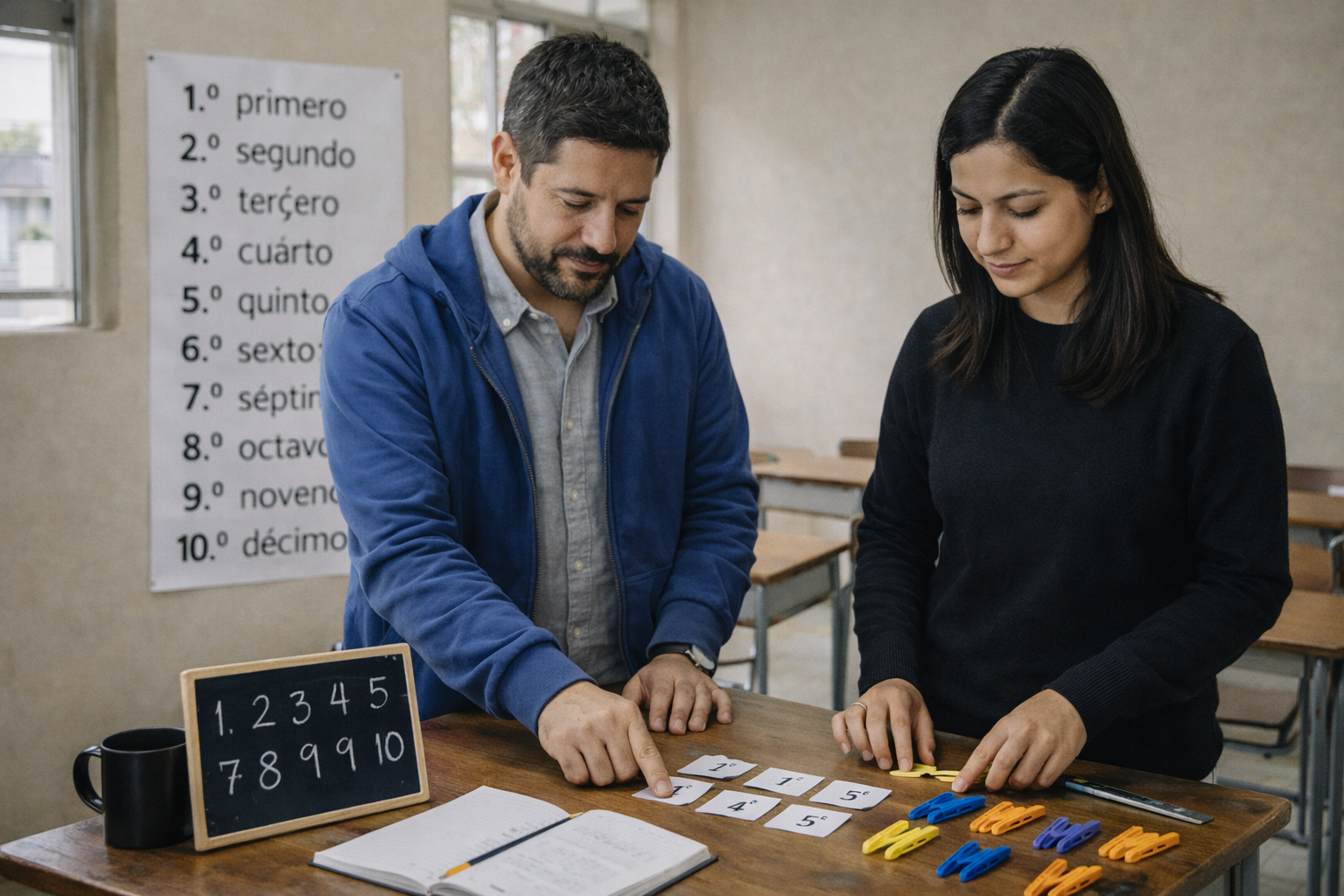
Los números ordinales en inglés permiten hablar de fechas, posiciones y turnos. Desde first hasta twentieth, son esenciales para entender frases como «the second floor» o «the fifteenth birthday party». Aprenderlos desde el inicio te ayuda a comunicarte con mayor precisión y naturalidad.
A diferencia de los cardinales (one, two, three), los ordinales indican orden o secuencia. Son clave para decir tu cumpleaños, hablar del piso donde vives, numerar visitas o describir episodios de una serie. En esta lección verás cómo se usan en contextos reales que reflejan la vida cotidiana.
Los ejemplos están diseñados para principiantes. Cada diálogo presenta una estructura simple y clara donde aparece un número ordinal acompañado de verbos comunes como is, have o visit. Así podrás memorizar la forma correcta, su pronunciación y su uso natural en conversaciones.
Gramática clave
Los números ordinales en inglés terminan en -th, salvo algunas excepciones:
1st: first
2nd: second
3rd: third
A partir del cuarto, la mayoría siguen el patrón: fourth, fifth, sixth, hasta twentieth. Se usan con artículos definidos como the, y en estructuras como:
Today is the tenth of the month.
This is my twelfth visit.
He is the eleventh student on the list.
Se escriben también con abreviaciones numéricas: 1st, 2nd, 3rd, 4th, etc. Estas formas son comunes en calendarios, listas, correos y formularios.
¿Cómo mejorar tu práctica?
Nuestros libros para principiantes incluyen ejercicios con números ordinales aplicados a fechas, eventos y rutinas. Aprenderás a escribir correctamente, identificar errores comunes y ganar seguridad. Cada lección está pensada para acompañarte paso a paso con claridad.
Empieza hoy a hablar de forma ordenada y fluida. Aprende a usar los números que organizan tu vida diaria, desde el primer hasta el vigésimo.
Practica con la IA estas frases
First (1st)
A: Is this your first English class?
B: Yes, this is my first English class.
A: Is this your first English class?
B: Yes, this is my first English class.
Second (2nd)
A: What is your second language?
B: English is my second language.
A: What is your second language?
B: English is my second language.
Third (3rd)
A: Is your room on the first floor?
B: No, it is on the third floor.
A: Is your room on the first floor?
B: No, it is on the third floor.
Fourth (4th)
A: Is this your first coffee today?
B: No, this is my fourth coffee.
A: Is this your first coffee today?
B: No, this is my fourth coffee.
Fifth (5th)
A: What is your favorite day of the week?
B: My favorite day is the fifth day, Friday.
A: What is your favorite day of the week?
B: My favorite day is the fifth day, Friday.
Sixth (6th)
A: Is he your first child?
B: No, he is my sixth child.
A: Is he your first child?
B: No, he is my sixth child.
Seventh (7th)
A: Is this your first try?
B: No, this is my seventh try.
A: Is this your first try?
B: No, this is my seventh try.
Eighth (8th)
A: Is this your first meeting today?
B: No, this is my eighth meeting today.
A: Is this your first meeting today?
B: No, this is my eighth meeting today.
Ninth (9th)
A: Is that your first book in English?
B: No, it is my ninth book in English.
A: Is that your first book in English?
B: No, it is my ninth book in English.
Tenth (10th)
A: Is today the first of the month?
B: No, today is the tenth of the month.
A: Is today the first of the month?
B: No, today is the tenth of the month.
Eleventh (11th)
A: Is he the first student on the list?
B: No, he is the eleventh student on the list.
A: Is he the first student on the list?
B: No, he is the eleventh student on the list.
Twelfth (12th)
A: Is this your first visit to this city?
B: No, this is my twelfth visit.
A: Is this your first visit to this city?
B: No, this is my twelfth visit.
Thirteenth (13th)
A: Is this the first episode of the series?
B: No, this is the thirteenth episode.
A: Is this the first episode of the series?
B: No, this is the thirteenth episode.
Fourteenth (14th)
A: Is she your first cousin?
B: No, she is my fourteenth cousin.
A: Is she your first cousin?
B: No, she is my fourteenth cousin.
Fifteenth (15th)
A: Is this your first birthday party this year?
B: No, this is my fifteenth birthday party this year.
A: Is this your first birthday party this year?
B: No, this is my fifteenth birthday party this year.
Sixteenth (16th)
A: Is this your first lesson with this teacher?
B: No, this is my sixteenth lesson with this teacher.
A: Is this your first lesson with this teacher?
B: No, this is my sixteenth lesson with this teacher.
Seventeenth (17th)
A: Is your apartment on the first floor?
B: No, it is on the seventeenth floor.
A: Is your apartment on the first floor?
B: No, it is on the seventeenth floor.
Eighteenth (18th)
A: Is this the first song on the playlist?
B: No, it is the eighteenth song.
A: Is this the first song on the playlist?
B: No, it is the eighteenth song.
Nineteenth (19th)
A: Is this your first day at work?
B: No, this is my nineteenth day at work.
A: Is this your first day at work?
B: No, this is my nineteenth day at work.
Twentieth (20th)
A: Is today the first day of the course?
B: No, today is the twentieth day of the course.
A: Is today the first day of the course?
B: No, today is the twentieth day of the course.